
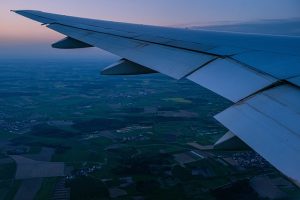
If you’ve ever looked at an airplane’s wings up close, you may have noticed that they aren’t completely flat. With the exception of specialized aircraft, most airplanes have asymmetrical, curved wings. Known as cambered wings, they offer several benefits.
What Are Cambered Wings?
Cambered wings are characterized by a curved airfoil. An airfoil, on the other hand, is the cross-sectional shape of an aircraft structure, such as a wing. Cambered wings aren’t completely straight and flat. Instead, they are curved from the leading edge to the trailing edge.
If you were to cut a wing and view it from the side, you would notice that the top is more curved than the bottom. Cambered wings are intentionally curved this way to manipulate airflow. During flight, air moves both over and under the wing. This curvature helps to guide airflow for maximum performance.
Increased Lift
One of the main reasons airplanes have cambered wings is to increase their lift. As previously mentioned, the top of a wing is more curved than the bottom. This curvature differential improves lift coefficient for airplanes. Airplanes with cambered wings generate more lift at a given speed compared to airplanes with straight and flat wings.
Shorter Takeoff Distance
Cambered wings allow airplanes to take off from shorter runways. During takeoff, airplanes must generate enough lift to overcome their weight. Cambered wings help airplanes achieve this critical point at a lower speed when compared to flat wings. As a result, airplanes with cambered wings have a shorter takeoff distance.
Lower Landing Speed
Cambered wings affect landings as well. Pilots typically want to approach runways at the lowest speed possible for a safe landing. A lower landing speed allows for shorter braking distances, which protects the airplane’s tires and structures from unnecessary wear and tear. With cambered wings, airplanes generate sufficient lift at a lower speed.
Lower Stall Speed
Another benefit of cambered wings is a lower stall speed. In aviation, stall speed is the minimum airspeed at which an airplane must travel to generate sufficient lift and maintain level flight. If an airplane drops below its stall speed, it will begin to descend due to insufficient lift. Cambered wings promote a lower stall speed by improving lift coefficient.
In Conclusion
Cambered wings play a major role in an airplane’s performance. By increasing lift, reducing takeoff distance, lowering landing speeds and decreasing stall speed, they help make flight safer and more efficient.